
Custom patches are a popular way to personalize clothing, promote a business, represent a team or create a unique identity for a group. From embroidered logos on jackets to branded patches on uniforms, they offer a practical way to display designs on different types of apparel.
However, ordering custom patches involves more than simply choosing a design. Customers need to consider patch materials, dimensions, backing options, artwork quality, production time and delivery. Understanding these details before placing an order can help avoid mistakes and make the entire process easier.
Why Are Custom Patches Popular in Canada?
Custom patches are used by businesses, motorcycle clubs, sports teams, schools, clothing brands and community organizations across Canada.
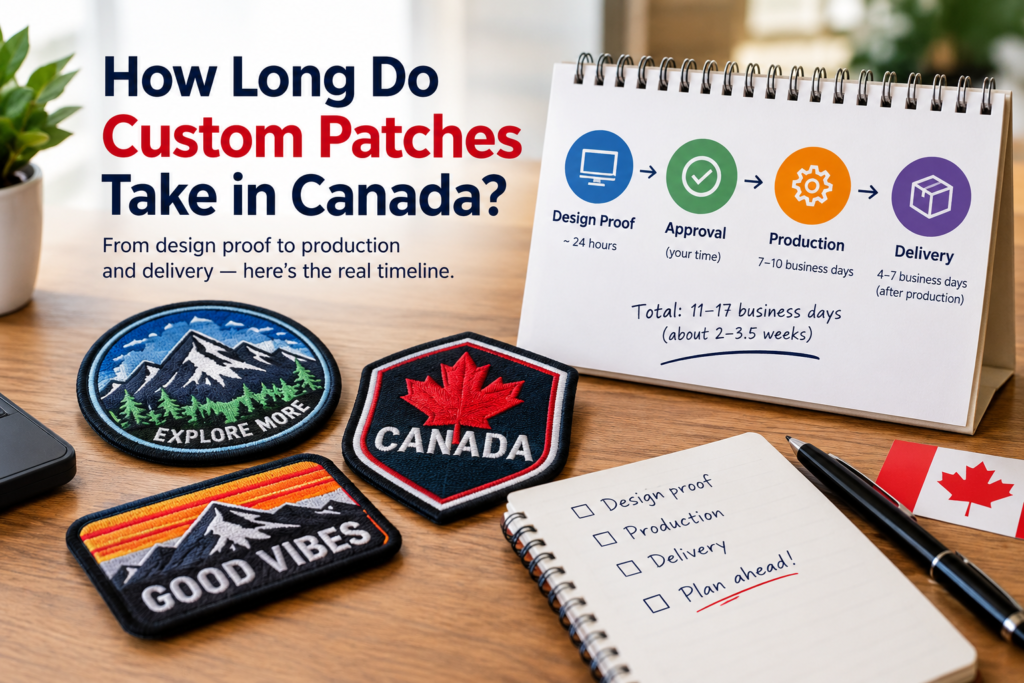
How Long Do Custom Patches Take in Canada?
If you have this question read this blog
 dawoodali449yahoo.com
One reason for their popularity is versatility. Patches can be attached to jackets, hats, backpacks, uniforms and other garments. They can also be designed in different shapes, sizes and colours to match a particular brand or group identity.
Some common uses include:
- Business branding: Display company logos on employee uniforms and promotional clothing.
- Motorcycle clubs: Represent club identities through original embroidered designs.
- Sports teams: Create team logos and personalized apparel.
- Schools and colleges: Produce patches for uniforms, jackets and student organizations.
- Clothing brands: Add distinctive designs to fashion collections and merchandise.
- Events: Create commemorative patches for special occasions and group activities.
Because each project has different requirements, choosing the right design and production options is important.
What Should You Consider Before Ordering Custom Patches?
Before contacting a manufacturer, prepare a few basic details about your project. This makes it easier to communicate your requirements and receive an accurate quote.
1. Choose Your Patch Design
Start by deciding what the patch should represent. It could be a company logo, team emblem, club name, illustration or custom artwork.
If you already have a digital design, prepare a clear image file. If you only have an idea or rough concept, explain the design requirements to the manufacturer.
Keep the artwork readable, especially when it contains small lettering or detailed elements.
2. Select the Right Patch Type
Different patch types offer different appearances and construction methods.
Embroidered patches: These use stitched threads to create a textured finish. They are suitable for logos, lettering and traditional clothing designs.
Woven patches: These use finer threads and are useful for designs containing smaller text or detailed artwork.
PVC patches: These have a flexible rubber-like construction and a raised appearance. They are often used for outdoor apparel and tactical gear.
Chenille patches: These have a soft, textured appearance and are commonly used on varsity jackets and letterman apparel.
The best option depends on your artwork, garment and intended use.
3. Decide on the Size and Shape
Patch dimensions affect both appearance and readability. A large back patch may require a different layout from a small hat patch.
Common shapes include circular, rectangular, shield-shaped, oval and custom-cut designs.
Before production, consider where the patch will be placed and measure the available area on the garment.
4. Choose the Right Backing
Backing determines how the patch attaches to clothing or accessories.
- Sew-on: A practical choice for jackets, leather and heavy denim.
- Iron-on: Suitable for compatible fabrics that tolerate heat.
- Velcro: Useful when patches need to be removable.
- Adhesive: Can work for temporary applications.
- Safety pin: Suitable for temporary placement.
Always check garment compatibility before selecting a backing option.
How Does the Custom Patch Ordering Process Work?
Most custom patch orders follow a straightforward process. Knowing what happens at each stage helps customers plan their projects.
Step 1: Submit Your Design Requirements
Share your artwork, preferred patch type, dimensions, backing and required quantity. If you do not have finished artwork, explain your concept and provide any available references.
Step 2: Receive a Design Proof
The manufacturer prepares a digital proof showing how the patch is expected to look. This gives customers an opportunity to review the artwork before production.
Check the spelling, colours, dimensions and overall layout carefully. Request any necessary changes before approval.
Step 3: Approve the Artwork and Confirm Payment
Once the design is correct, approve the final proof and complete the payment process according to the manufacturer's terms.
Production generally begins after the required approval and payment are received.
Step 4: Manufacturing
The approved artwork moves into production. The manufacturing process depends on the patch type, design complexity, quantity and materials selected.
Step 5: Shipping and Delivery
After production is complete, the order is prepared for shipping. Delivery time depends on the destination, shipping method and courier processing.
How Long Does Custom Patch Production and Delivery Take in Canada?
Production and delivery times are important when ordering patches for an upcoming event, business launch, club activity or clothing collection.
However, the total timeline is not always the same for every order. Design approval, order quantity, patch construction and shipping location can all affect the estimated arrival date.
Customers should distinguish between manufacturing time and shipping time. Manufacturing covers the time needed to produce the patches, while delivery covers transportation after production is finished.
For more information about estimated timelines, customers can read this guide to custom patch production and delivery time in Canada.
It is also a good idea to place orders early when patches are needed for a fixed event or deadline. This allows time for artwork revisions, production and possible shipping delays.

How Do You Choose a Reliable Custom Patch Manufacturer?
Selecting a manufacturer is an important part of the ordering process. A suitable supplier should clearly explain its production requirements and available options.
Consider these factors before making a decision:
Design support: Check whether the manufacturer provides digital proofs and allows revisions before production.
Product options: Look for suitable patch types, backing choices, shapes and sizes.
Order quantities: Confirm the minimum order requirement for each design.
Production information: Ask for an estimated manufacturing timeline before confirming the order.
Communication: Choose a supplier that explains the process and responds clearly to questions.
Quality expectations: Review the artwork proof and confirm the construction details before approving the order.
Comparing these factors can help customers make a more informed decision instead of choosing a supplier based only on price.
Where Can You Order Custom Patches in Canada?
Customers looking for custom embroidered patches can explore specialist manufacturers that offer different design and production options.
Stitch Patches Canada provides custom patch services for businesses, motorcycle clubs, sports teams, organizations and clothing brands. Customers can discuss their artwork, patch dimensions, backing preferences and quantities before approving production.
The company offers design proofs and revisions, with a minimum order of 25 patches per design. Customers can visit Stitch Patches Canada to explore custom patch options and request a quote for their project.
Before submitting an order, customers should make sure they have permission to use any logos, brand names or protected artwork included in their designs.
Frequently Asked Questions About Custom Patches
Can I order custom patches using my own logo?
Yes. Customers can submit their own artwork or logo for a custom patch. Make sure you have the necessary rights or permission to use the design.
What is the minimum quantity for custom patches?
Minimum order quantities vary between manufacturers. Stitch Patches Canada requires a minimum of 25 patches per design.
Can I make changes after receiving a design proof?
That depends on the manufacturer's revision policy. Always review the proof carefully and request corrections before approving production.
Which patch type is best for clothing brands?
Embroidered and woven patches are popular choices for clothing brands. Embroidered patches offer a textured finish, while woven patches can reproduce finer details.
Should I order patches before an event?
Yes. Ordering early gives you additional time for artwork approval, manufacturing and shipping. Avoid relying on the estimated production time alone when planning an event deadline.
Final Thoughts
Ordering custom patches in Canada becomes easier when you understand the design, material, backing and production requirements before starting. A clear artwork file, accurate measurements and an approved design proof can help prevent unnecessary delays.
Whether you need patches for business uniforms, motorcycle clubs, sports teams or clothing collections, take time to compare manufacturers and understand their ordering policies. Proper planning helps ensure that the finished patches meet your expectations and arrive when you need them.